
 Spotify
 YouTube
 Apple Podcasts
In April this year, NICE raised its cost-effectiveness threshold for the first time in 20 years, moving from £20,000-£30,000 per QALY to £25,000–£35,000 per QALY. On paper, it’s not a big difference. But the fact that there was a change, and how it came about is significant.
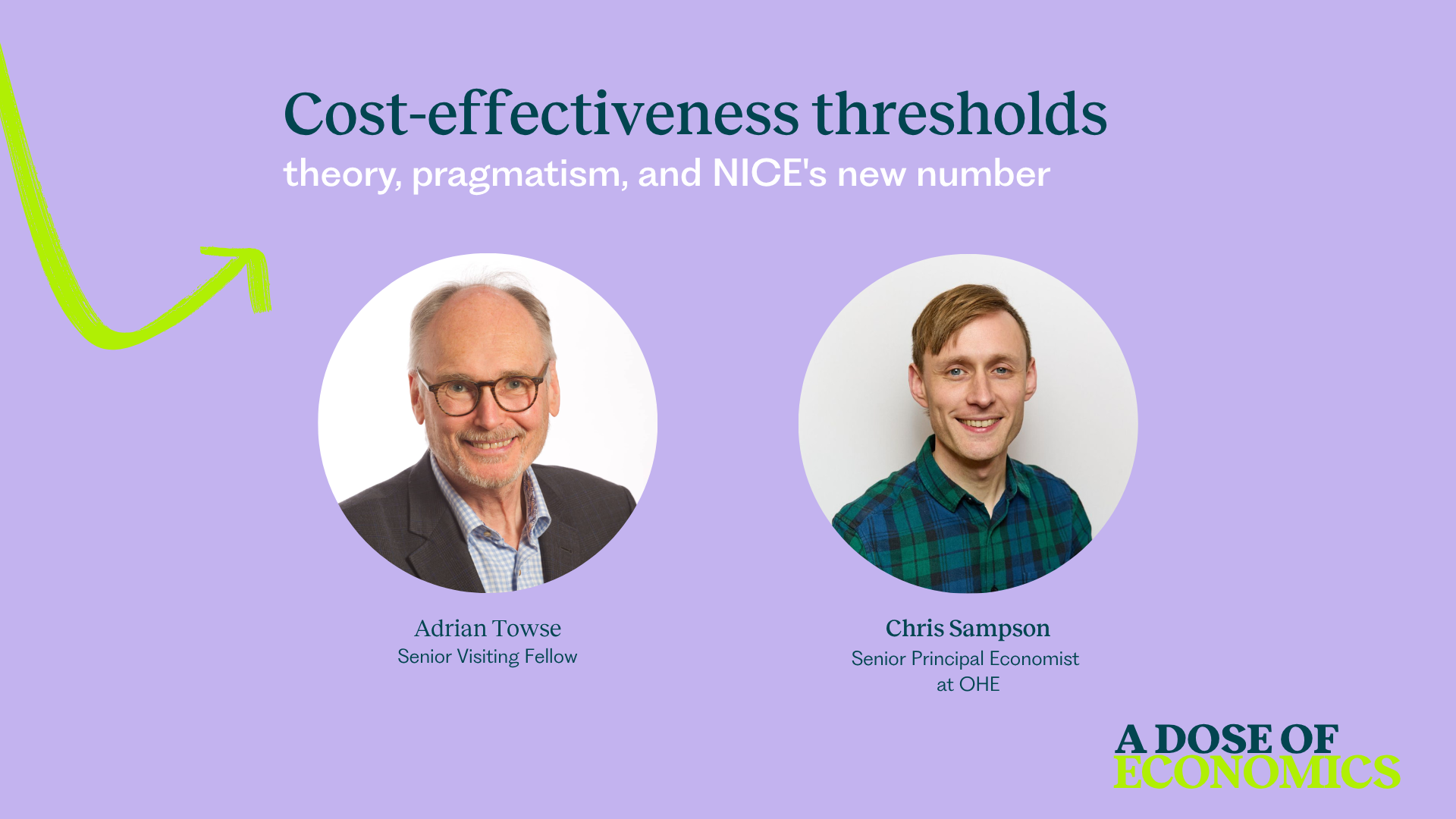
Grace Hampson is joined by Adrian Towse, who ran OHE as its Director for many years, and Chris Sampson, Senior Principal Economist at OHE, to dig into one of the most contested debates in health economics: the cost-effectiveness threshold, what it represents, and how it should be determined.
They’ll discuss
- Why NICE’s threshold has remained unchanged for so long, and how it was historically determined
- The impact of the US-UK trade deal on the threshold, and what it means for NICE in practice
- What the new threshold means for patient access and trade-offs elsewhere in the healthcare system
- What this change means for the UK as a launch market — and where health economists should be looking next
Speakers



Listen to the episode
Never miss an episode
Subscribe to our mailing list to receive the latest episode