




Key messages
- Biosimilar-Enabled Access and Repositioning (BEAR) can unlock substantial value for patients, health systems and industry — yet it remains overlooked.
- Health systems worldwide already apply BEAR — but in isolation, and through divergent mechanisms.
- While opportunities for repositioning exist globally, mechanisms for unlocking those opportunities vary by system-type.
- BEAR adoption requires overcoming misaligned incentives, free-riding, and limited HTA capacity, while leveraging tailored stakeholder engagement and robust evidence generation, including RWE.
- In order to move from isolated examples into standard practice, it will be necessary to work towards: stakeholder alignment; education and early-dialogue; and robust evidence generation.
Biologic medicines account for over 40% of global pharmaceutical spend. When originator patents expire, biosimilar competition should drive prices down, generating cost-savings, broadening access, and improving outcomes, yet that promise remains largely unrealised. From the first US launch in 2015 up to 2025, biosimilars saved the US health system an estimated $56.2 billion in drug costs, but one analysis estimates that $124.5 billion in savings could be achieved: a $68 billion gap. Supply- and demand-side barriers as well as contracting structures produce low penetration, recurring shortage risk, and a growing ‘biosimilar void’. The dominant policy response has been narrow, focusing on biosimilar value as a cost-saving opportunity in already-funded populations. This report argues that this framing misses a larger opportunity: biosimilar competition can also generate clinical benefits by enabling broader and potentially more clinically appropriate use of biologic therapies, for example by reducing economically driven restrictions on eligible populations or treatment positioning. The research thereby addresses an important gap in the prevailing narrative.
When biosimilar competition lowers the cost of a biologic, it can do more than reduce drug expenditures; it can change the therapy’s cost-effectiveness profile, potentially bringing it within the acceptable range for populations, indications, and treatment lines previously considered too expensive to fund. This requires lifecycle reassessment and practice updating, revisiting earlier coverage and guideline decisions in light of the new lower price. This report terms that mechanism Biosimilar-Enabled Access and Repositioning (BEAR): a lifecycle perspective that treats cost-effectiveness as open to revision, distinct from and additional to the savings from price competition alone.
The analysis was conducted in three phases: a scoping review of the global literature identifying BEAR cases; in-depth examination of case studies; and a structured workshop with eight independent HTA, policy and academic experts across six countries. First, an analytical framework was developed, describing a recurring sequence from trigger to process to impact through five channels (see Figure 2): severity threshold broadened; treatment line advanced; expansion to new populations or indications; removal of administrative or formulary restrictions; and liberalised prescribing.
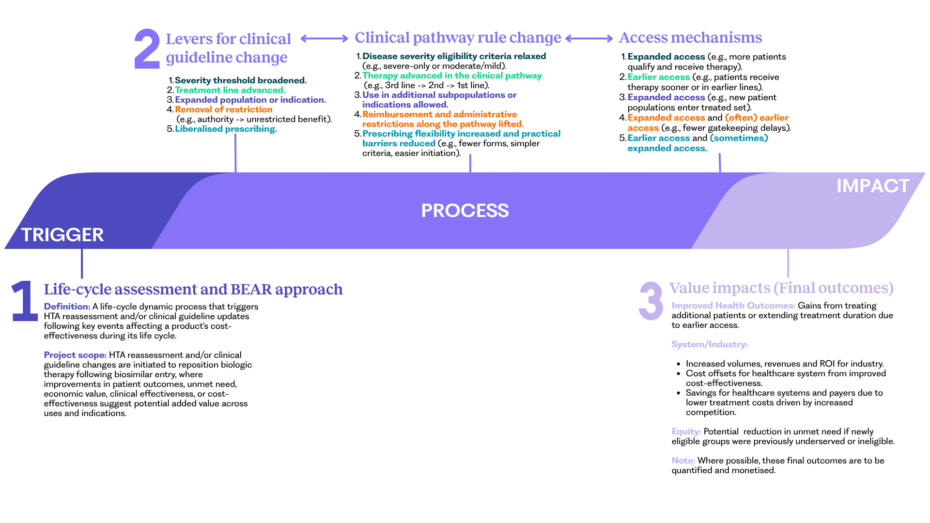
Figure 2 The BEAR framework: trigger, channel and impact
Across every BEAR case in the literature, biosimilar entry, and the price reduction it brings, was the enabler. Reassessment by the relevant decision-maker then expanded access, extended use to previously denied indications, advanced the therapy to an earlier line, or removed restrictions. Spanning 11 national health systems and diverse indications, these examples confirm BEAR is widely observed. Yet none acted systematically as every case was reactive or ad hoc. Nonetheless, seven selected cases (boxes 1–7, Appendix C) illustrate all five framework channels across five systems: NICE (England), PHARMAC (New Zealand), PBAC (Australia), TLV (Sweden) and CMS (US).
In-depth modelling of two cases demonstrates the quantitative value of BEAR. For denosumab in the US, modelling across three expanded osteoporosis populations we estimated 492,366 fractures prevented and $22.9 billion in fracture-related cost-offsets — nearly twice the $12.0 billion in drug cost-savings available from only substituting existing patients onto cheaper biosimilars. The post-BEAR ICER of $100,921/QALY sits within the US willingness-to-pay range of $100,000–$150,000/QALY. In total (incorporating the cost offsets as well as the cost of treatment expansion), the BEAR approach would generate ~$10.5Bn in net monetary benefit (NMB) to the health system, calculated at the $150,000/QALY threshold (the upper end of an ICER’s WTP range).
In England, bevacizumab had been declined for mCRC three times on cost-effectiveness grounds, largely because of the originator’s acquisition price, until NICE reassessed it under its whole lifecycle approach. Biosimilar-driven price erosion brought the therapy within NICE’s £30,000/QALY threshold, opening access to roughly 7,000 previously ineligible patients, with the negotiated net-price discount cutting the ICER to an estimated £20,378/QALY. This delivered a health gain of 2,170 QALYs to mCRC patients, and £20.8 million of NMB over and above the £132 million that biosimilar competition alone saved across bevacizumab’s four already-recommended indications. The NMB achieved through BEAR for mCRC alone over three years is equal to 15% of the savings from the other four indications over six years.
How BEAR can be unlocked depends on the system. CEA-driven systems (England, Australia, Canada) are responsive to the ICER and NMB; budget-impact systems (Spain) focus on cost-savings but reward bottom-up engagement with regional HTA, pharmacy, and clinical stakeholders; clinical-value systems (Germany) require demand-side policy — quotas, rebate contracts, automatic substitution — rather than reassessment; and market-based systems (US) require engaging a fragmented set of payers, societies, and guideline developers. NICE’s whole lifecycle approach is the closest to systematic, underpinning the England examples; elsewhere opportunities are flagged reactively. CEA-driven systems are best positioned since reassessment may in some cases require no more than revisiting a prior appraisal at the new biosimilar price.
The workshop identified three recurring challenges to systematic BEAR adoption. First, complexity and misaligned incentives complicate the case for reassessment: negotiations often struggle to reconcile the scale of access expansion with fiscal acceptability, free riding discourages investment in supporting evidence, and, in some systems, intermediary incentives can work against expanded access. Second, data and evidence gaps persist because biosimilar regulators and manufacturers typically rely on equivalence data alone, generating no additional evidence to support expanded populations or indications. Third, institutional and systemic constraints vary by country but consistently slow progress. Limited HTA capacity constrains reassessment in Australia, Canada and the UK, while Germany’s founding principles restrict the use of economic arguments. Institutional rigidity and a narrow focus on cost-savings limit ambition in Spain and Australia, and fragmentation across decentralised systems, such as Spain’s regional structure, further complicates coordinated action.
The workshop’s recommendations can be grouped under four themes. They address the key gaps identified across the evidence and are set out by theme in the table below.
| HTA, GUIDELINES, PAYERS & REGULATORY ALIGNMENT | Encourage cross-stakeholder collaboration and joint consultations to reduce fragmentation |
| Publish studies surfacing misalignment between clinical guidelines and payer policies | |
| Adopt formal policies for routine post-LoE reassessment of biologic therapies | |
| Leverage bottom-up approaches in decentralised systems (e.g. Spain, Germany, US) | |
| Create regulatory incentives to reward evidence generation | |
| EVIDENCE GENERATION | Invest proactively in RWE and novel data (modelling, simulation, Bayesian methods) to support reassessment |
| Ensure evidence consistency across sub-national actors in decentralised systems | |
| Support public-sector incentives to address the free-rider problem in evidence investment | |
| STAKEHOLDER EDUCATION | Raise awareness of BEAR’s value among key stakeholders with messaging tailored to system type |
| Upskill stakeholders — particularly patient and clinical groups — to engage effectively with formal HTA processes | |
| EARLY DIALOGUE | Embed structured early dialogue between manufacturers, regulators, HTA bodies, and payers on evidence requirements |
| Develop proactive horizon scanning and routine lifecycle assessment commitments at post-LoE stage |
This report establishes BEAR as a generalisable mechanism, quantifying examples of value generation that goes beyond price-competition savings alone, and identifies the structural reasons this value goes unrealised, alongside recommendations to address them. We recommend that biosimilar entry should trigger a structured review of whether the new price justifies expanded access to new populations, indications and earlier treatment lines. This is timely as a wave of major biologics are approaching loss of exclusivity. Routine reassessment could also address the wider biosimilar market failure: by rewarding the fuller value biosimilars unlock, it could strengthen the commercial case for development and help close the low-penetration and ‘biosimilar void’ gaps that persist globally, provided incentives and implementation are aligned across health systems.
Biosimilar competition is routinely used only to lower prices. This report shows it can also be a recurring enabler of expanded access, generating value that is comparable to, and in some cases exceeding, procurement savings. That value is real and measurable but not automatic. Embedding systematic lifecycle assessment and BEAR into how health systems manage biologics post-LoE suggests both an immediate opportunity and a need for lasting reform.
This Contract Research Report was commissioned and funded by Organon LLC.