
 Spotify
 YouTube
 Apple Podcasts
Individualised therapies are treatments developed for a single patient, or a small handful of patients. They can be life-saving or life-altering, often where nothing else exists. In 2018, Mila became the first person in the world to receive a medicine designed just for her. So why isn’t the broader development of these treatments for ultra-rare genetic diseases keeping pace with scientific advances?
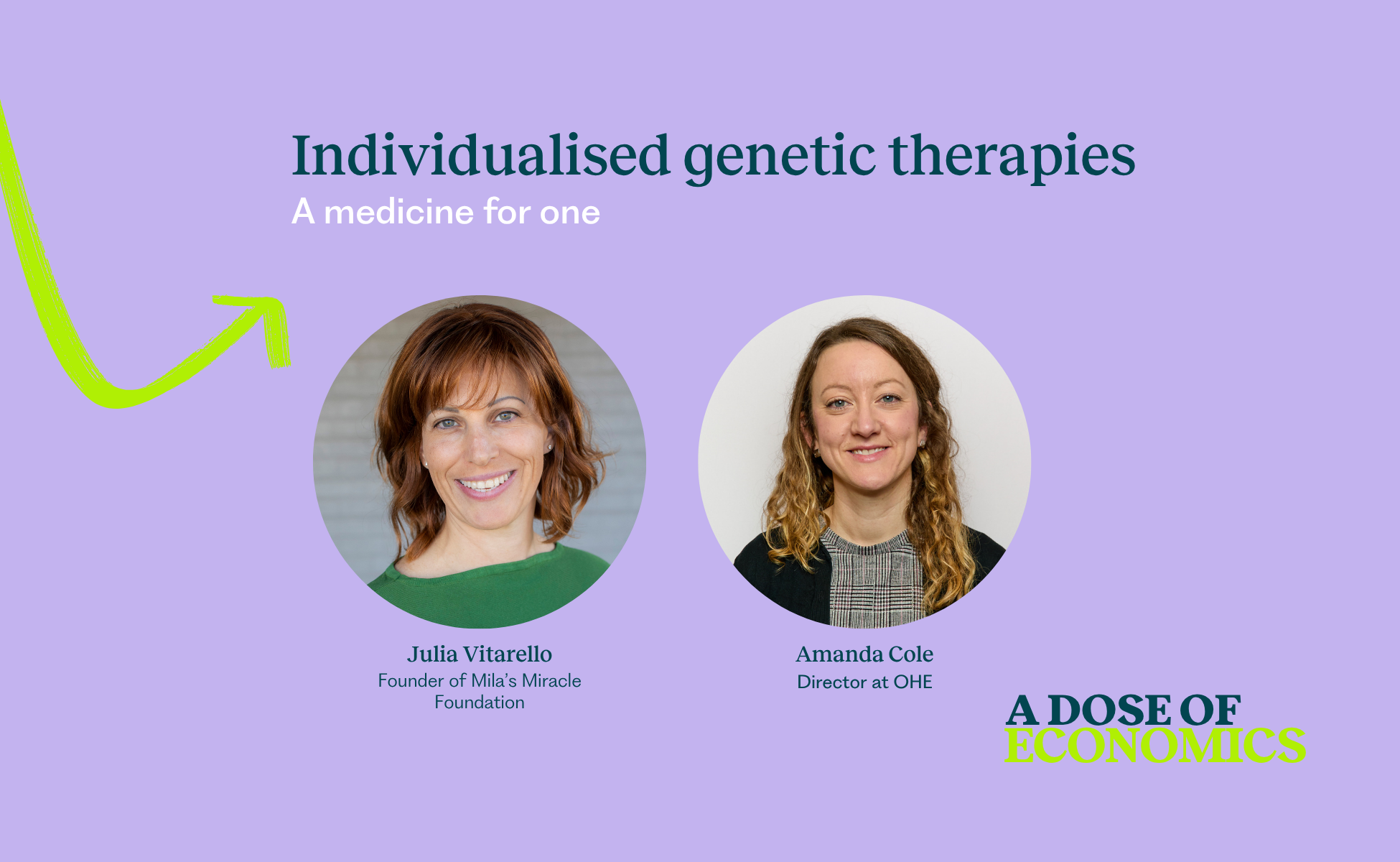
In the Season 2 premiere of A Dose of Economics, Grace Hampson is joined by Julia Vitarello, founder of Mila’s Miracle Foundation, and Amanda Cole, Director at the Office of Health Economics (OHE). They explore individualised genetic therapies such as ASOs and CRISPR, and the regulatory, HTA and reimbursement barriers to scaling them.
They’ll discuss:
- Why the conventional drug development model breaks down for ultra-rare diseases
- How milasen – the first medicine designed for just one person – was developed at unprecedented speed
- Why individualised therapies have proven possible and repeatable, but not yet scalable
- The MHRA’s draft rare therapies framework and the FDA’s plausible mechanism pathway
- How we might value and pay for a therapy for one person, and why the product may be the process, not the molecule
- The role of real-world data and patient registries